
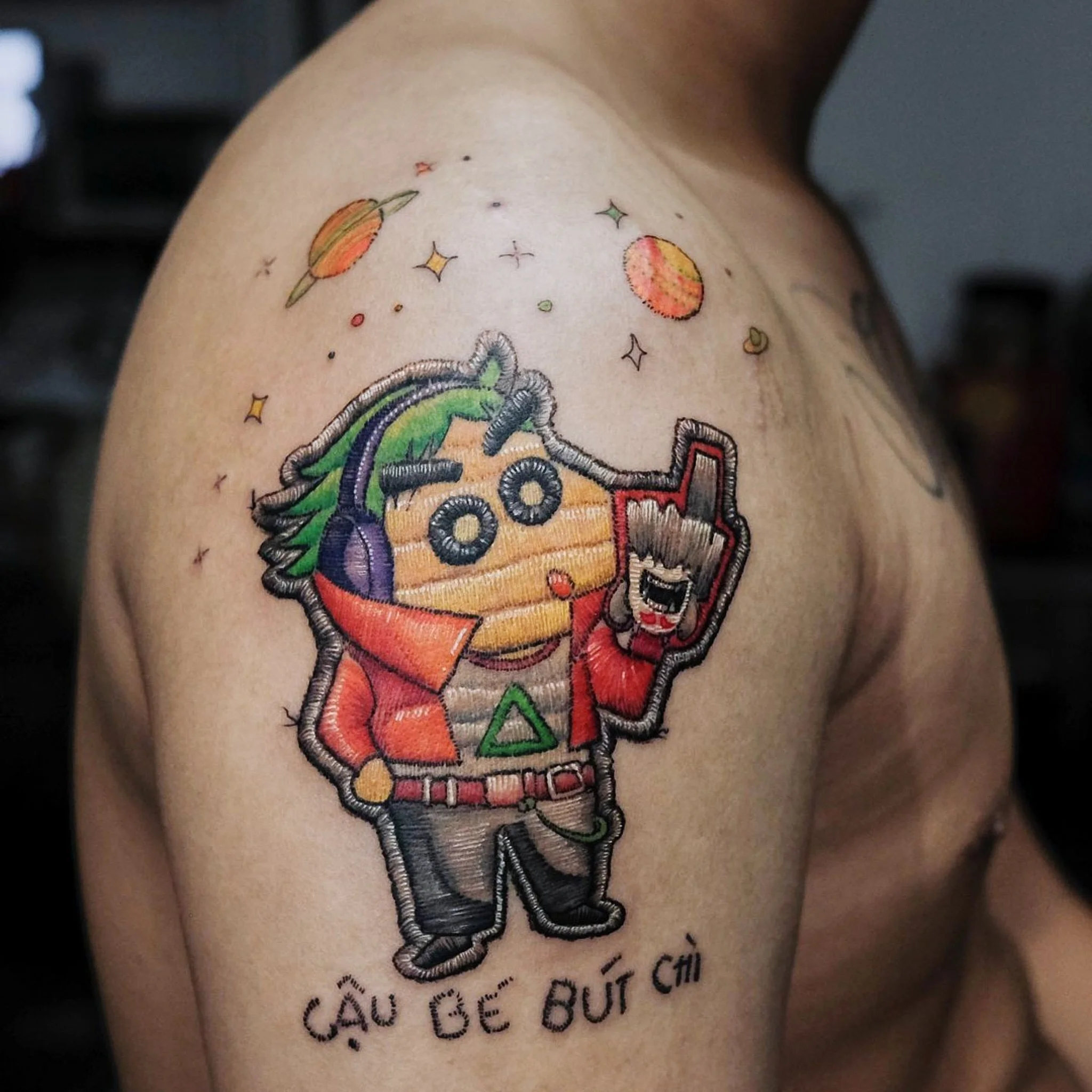
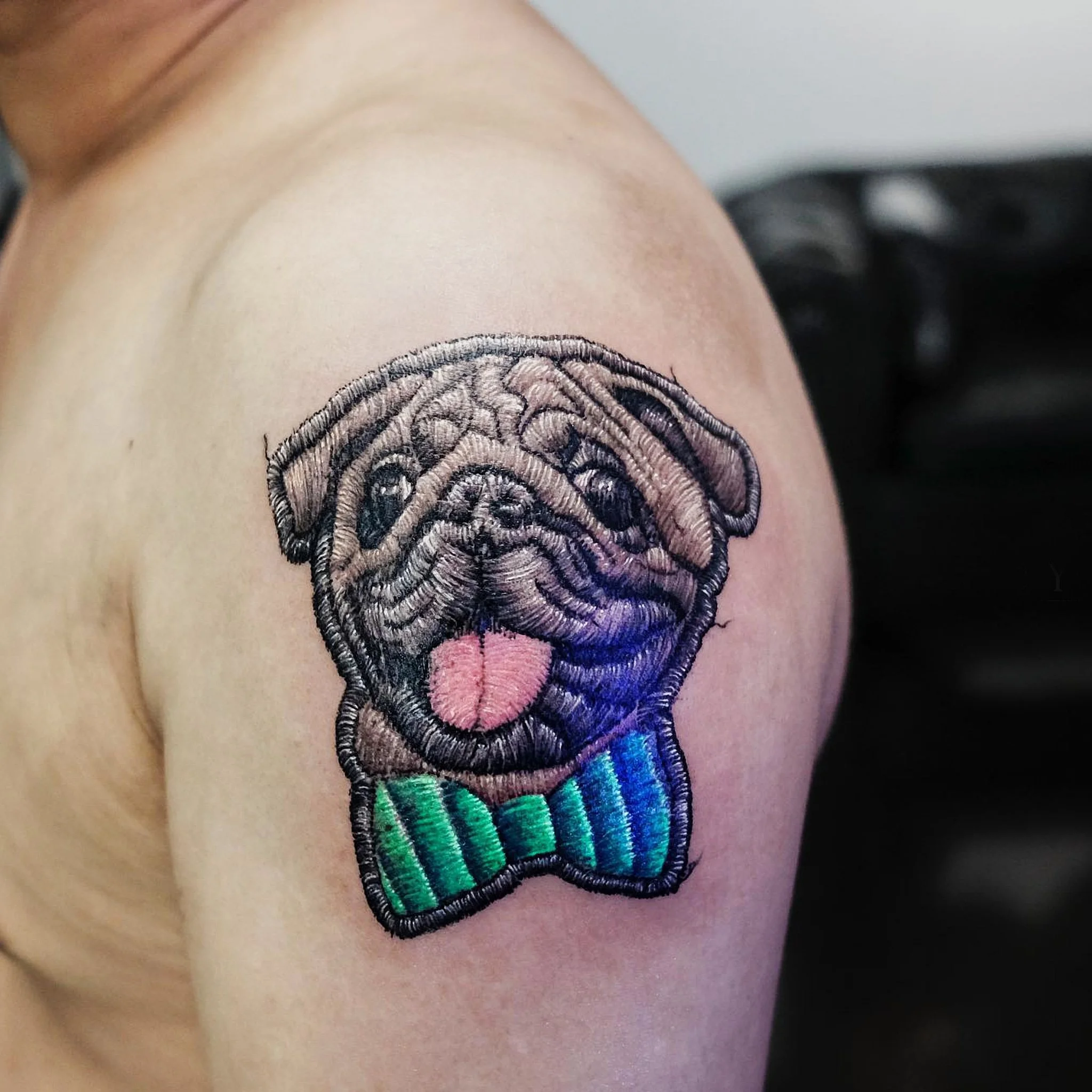
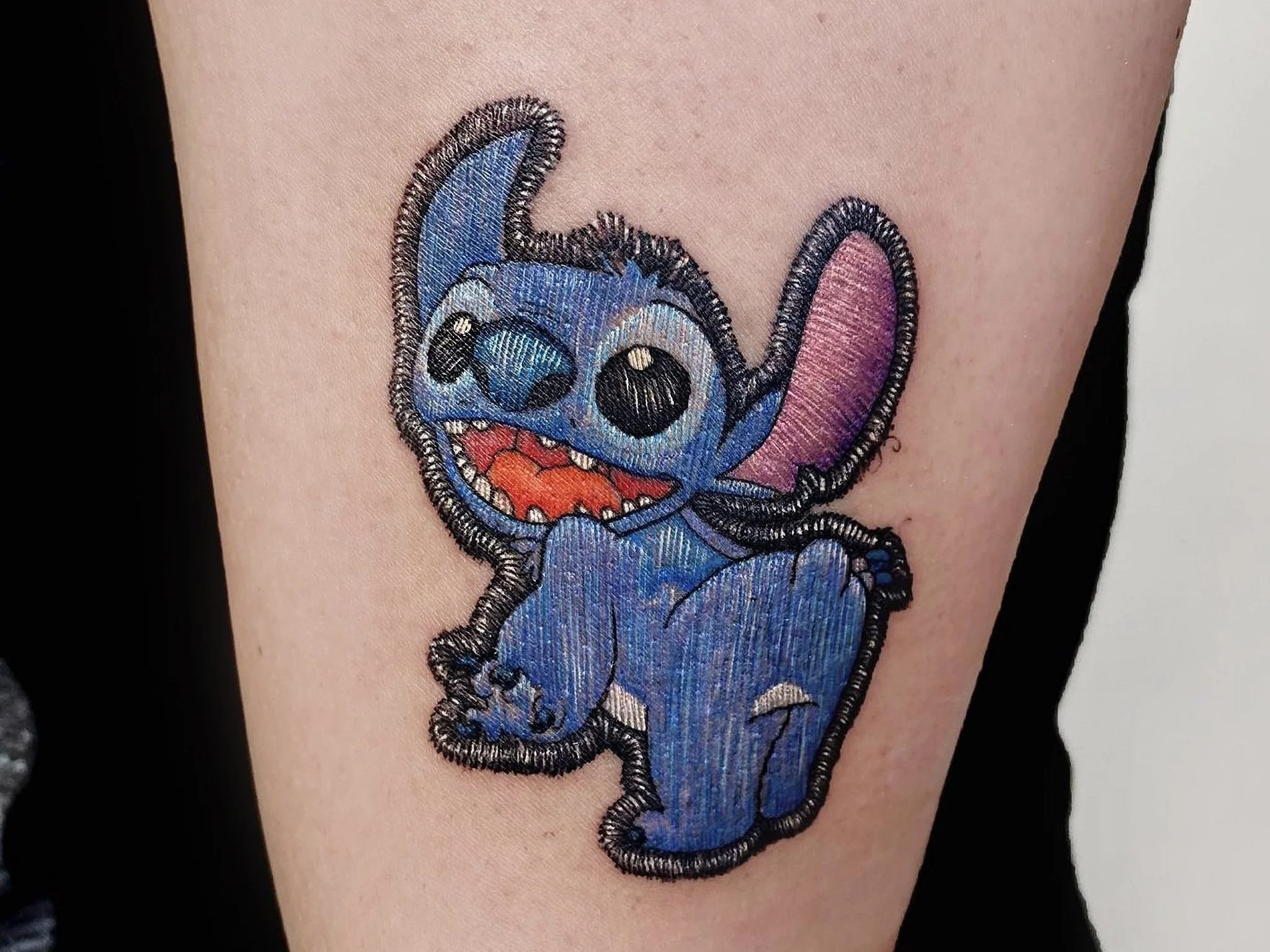
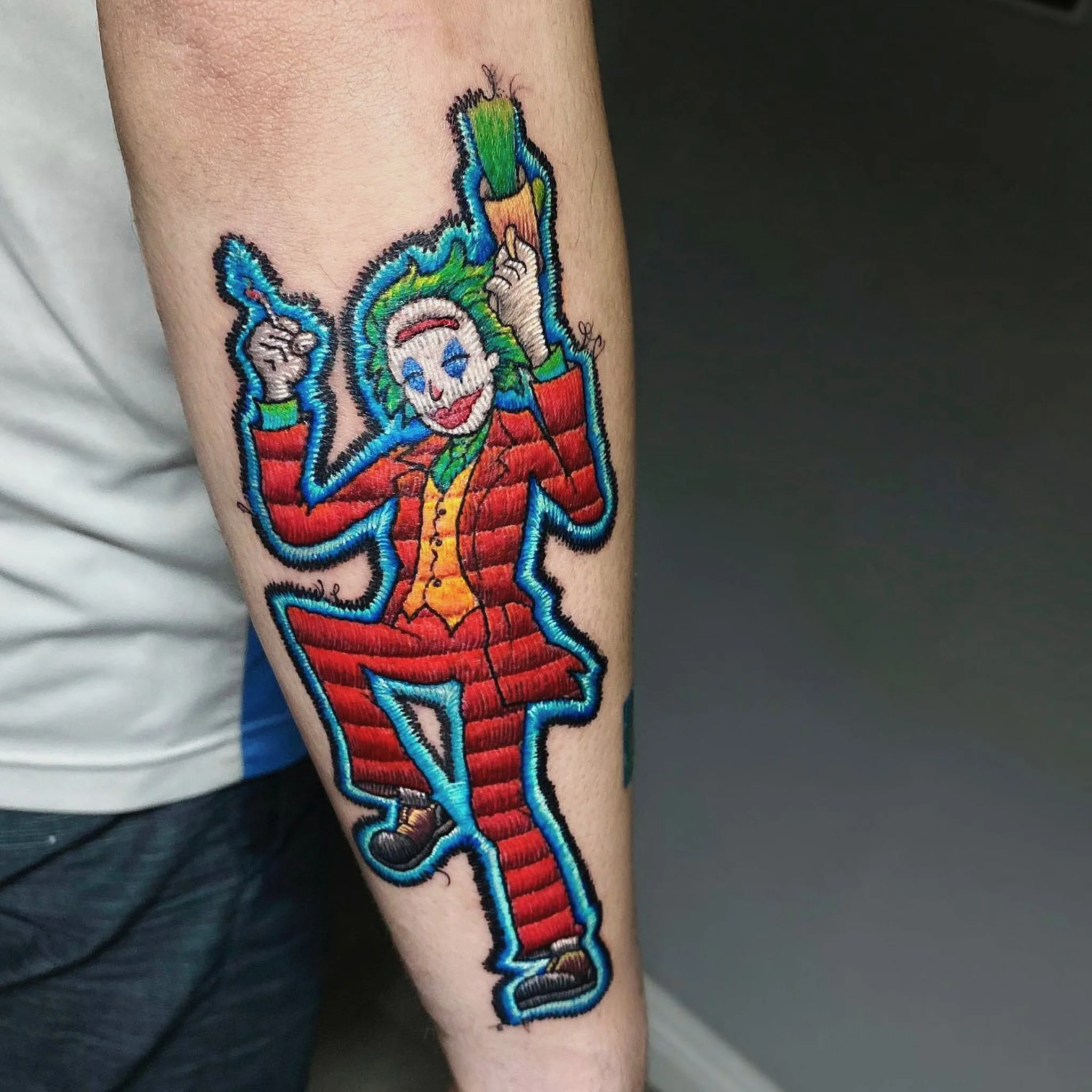
Embroidery tattoos use lines, highlights, and shadows to imitate thread. From a distance, the design can resemble a fabric patch. Up close, short strokes create the appearance of individual stitches.
The raised look is an optical illusion made with ink. The artist draws the texture of embroidery into the tattoo.
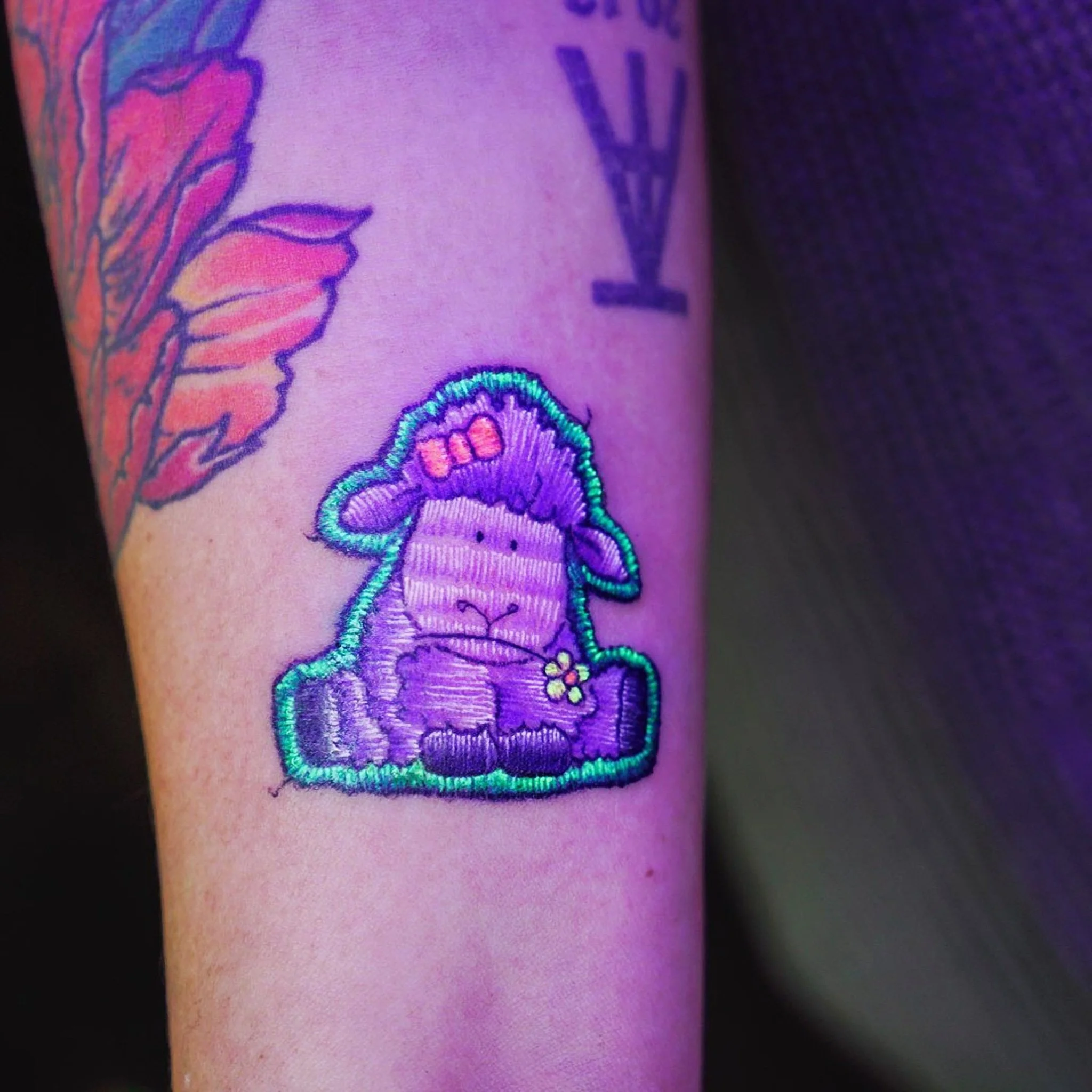

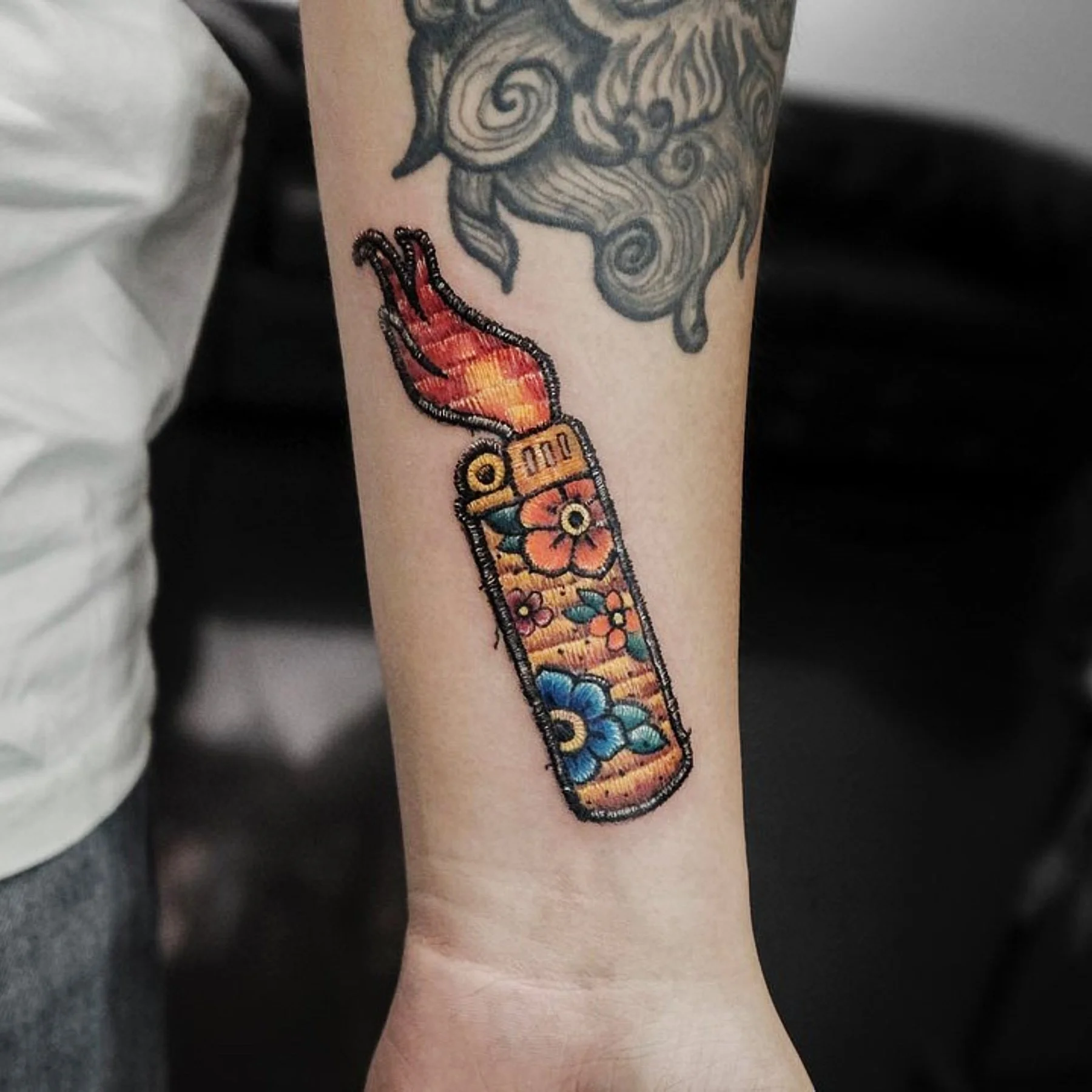
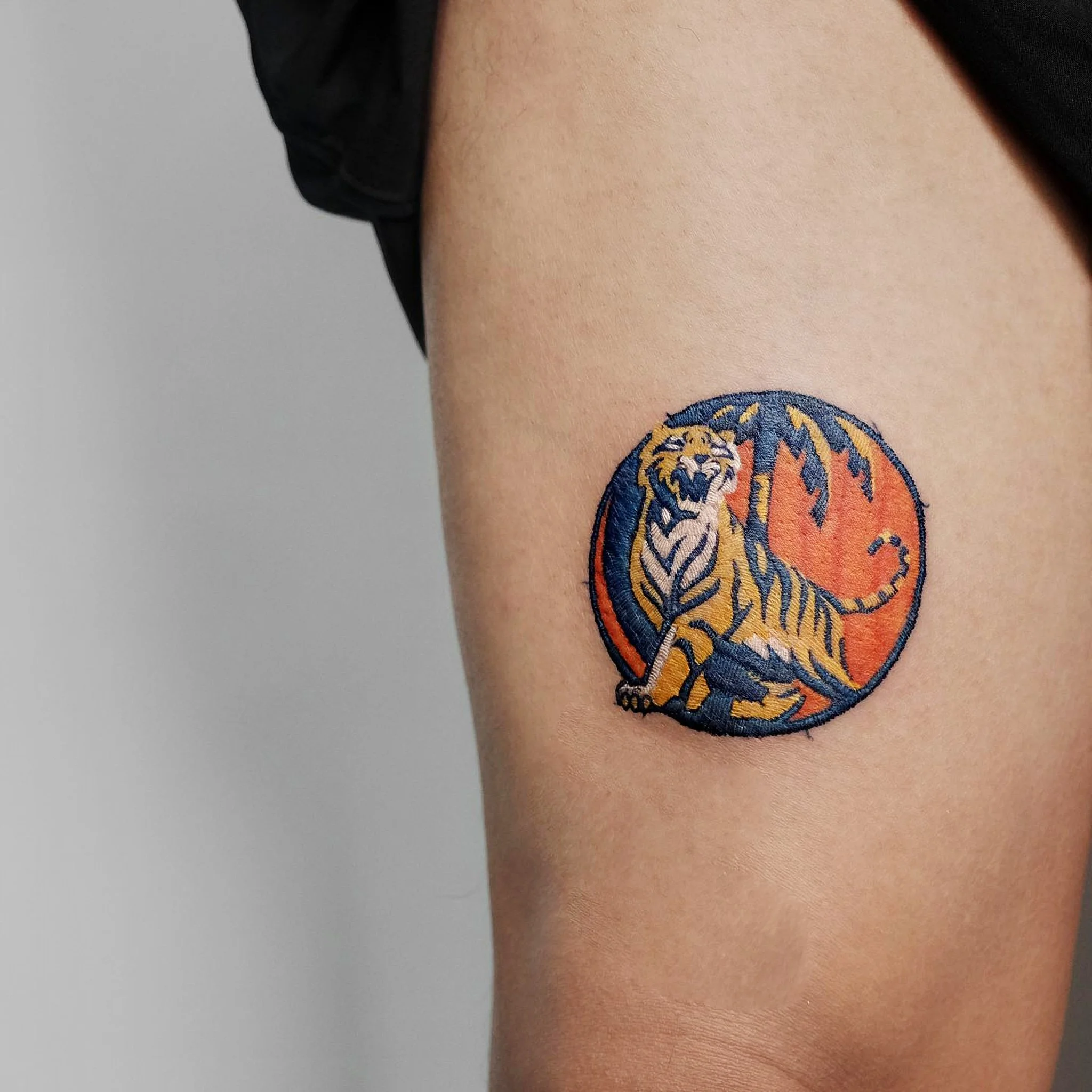


How the stitched effect works
Stitch direction helps describe the shape. Lines can follow the curve of a petal, fill an animal's face, or run along a patch border. Changing their direction separates one part of the drawing from another.
Highlights and dark edges give those lines depth. A light stroke beside a darker one can suggest the round surface of a thread. A shadow along the outside of a patch can make its edge appear to lift away from the skin.
Choosing an embroidery tattoo design
Start with a subject you can recognize in a simple outline. Animals, flowers, and illustrated characters offer different shapes for the stitch pattern to follow. A defined border gives the design a patch-like silhouette; an open edge lets the stitched shapes form the outline themselves.
Bring both subject references and examples of the texture you like. Explain what catches your eye: the visible stitches, the patch border, or the way light and shadow give the drawing depth. Those details are more useful than asking for a general “3D effect.”
Embroidery work at Recycle Tattoo
This gallery features Binx's embroidery tattoo work. Use it to compare the different subjects and approaches to the stitched effect. You can point to a particular detail when discussing your own idea.
For a tattoo at our Garden Grove studio, send us your references and preferred placement. Your artist can discuss which details to keep and how to adapt the drawing to the area. If you are preparing for your first session, read our guide to preparing for tattoo pain.
